A flea infestation introduces rapid physical discomfort and stress into a household. In the semi-arid climate of the San Joaquin Valley, warm temperatures accelerate the life cycle of Ctenocephalides felis from egg to…
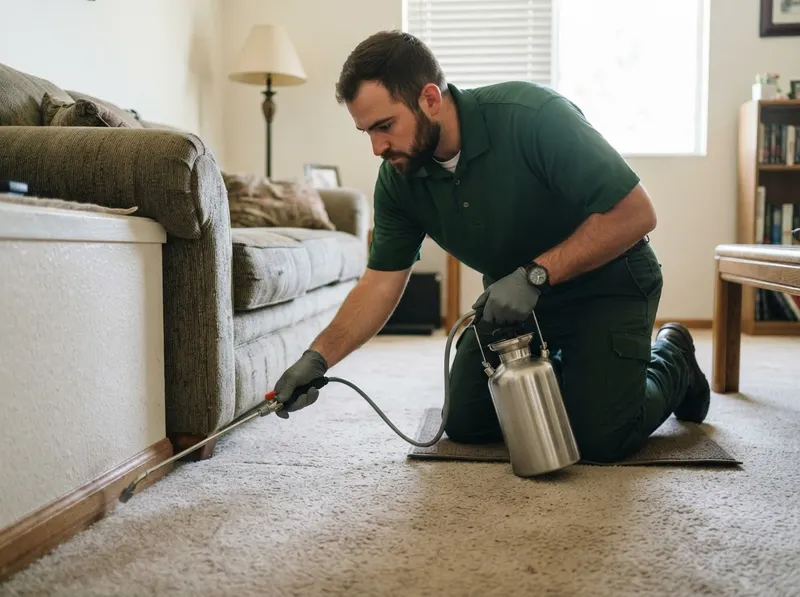
A flea infestation introduces rapid physical discomfort and stress into a household. In the semi-arid climate of the San Joaquin Valley, warm temperatures accelerate the life cycle of Ctenocephalides felis from egg to reproductive adult in as few as 14 to 21 days. Over-the-counter aerosol foggers disperse indiscriminate chemical mist that settles on horizontal surfaces without reaching the base of carpet fibers where 80% to 90% of the developing flea biomass resides. SilverOak Pest Solutions approaches flea eradication through clinical environmental management. The protocol utilizes non-staining, pet-conscious botanical formulations combined with an EPA-evaluated insect growth regulator (IGR) such as pyriproxyfen, which mimics juvenile hormone physiology to permanently prevent pupal emergence without heavy chemical scents.
Flea infestations differ significantly by property design and microclimate across Stockton. Concrete-slab foundations in Spanos Park, Brookside, and Weston Ranch generally confine fleas to high-pile carpet zones, area rugs, and upholstered furniture seams. Conversely, raised foundations and crawlspaces in established neighborhoods like Lincoln Village, Pacific, Sherwood Manor, and Country Club frequently harbor outdoor wildlife carriers, such as raccoons, feral cats, or opossums that nest underneath subfloors. Exterior perimeter treatments focus on shaded, humid outdoor microhabitats, such as damp turf beneath tree canopies along the San Joaquin River Delta or unpaved margins near Seaport, where adult fleas deposit eggs. If an infestation is localized to an interior living area, an indoor floor application isolates the threat; if pets frequently access shaded yard perimeters or detached structures near Morada, an integrated outdoor barrier is necessary to stop continuous mechanical re-infestation.
Preparation directly determines eradication velocity. Prior to arrival, residents vacuum all carpeting, rugs, and baseboards to stimulate adult emergence from protective pupal cocoons, discard vacuum contents in an exterior waste receptacle, and launder pet bedding at minimum 140°F water settings. Veterinary compliance aligns with structural treatment: pets must simultaneously receive approved preventative medication certified through the FDA Center for Veterinary Medicine to ensure they do not act as untreated hosts. The treatment process follows three sequential phases: (1) interior acoustic and visual inspection of high-traffic pet pathways and shaded resting spots; (2) hydraulic broadcast application of microencapsulated adulticides paired with juvenile hormone analogs to carpet bases, tile transitions, and baseboards; and (3) an exterior residual perimeter band extending 3 feet up the exterior foundation and 5 feet outward over adjacent soil or patio decking.
Regulatory standards guide every step of the interior application, aligning with mandates from the California Department of Pesticide Regulation and regional water protection frameworks overseen by the Central Valley Regional Water Quality Control Board. Technician execution adheres strictly to occupational health measures set by Cal/OSHA. Coordination with local companion animal wellness guidelines supported by the California Veterinary Medical Association helps guarantee domestic safety during structural remediation. For properties in Civic Center or dense suburban neighborhoods where municipal storm drains empty directly into local Delta waterways, products are applied with anti-drift delivery systems to protect water quality governed under the San Joaquin County Environmental Health Department and wildlife conservation policies managed by the California Department of Fish and Wildlife. For non-binding diagnostic inquiries or scheduling, contact our team directly at (209) 443-9373.
Every job gets a firm, written price after a free on-site visit.
For standards, safe disposal, and service guidance on PEST CONTROL SEVICE in Stockton, CA, useful references include U.S. EPA, ENERGY STAR, U.S. Dept. of Energy, Consumer.gov, U.S. Census Bureau, and Google Maps. General consumer and small-business resources are available from USA.gov, Better Business Bureau, FTC Consumer Advice, U.S. Small Business Administration, and Ready.gov.
Tell us about your flea control job in Stockton and we'll send a clear, written quote, usually the same day.
 SilverOak Pest Solutions