Residential properties near the San Joaquin River Delta experience persistent insect migration driven by seasonal moisture shifts, agricultural harvests, and microclimates across Brookside, Spanos Park, and Lincoln…
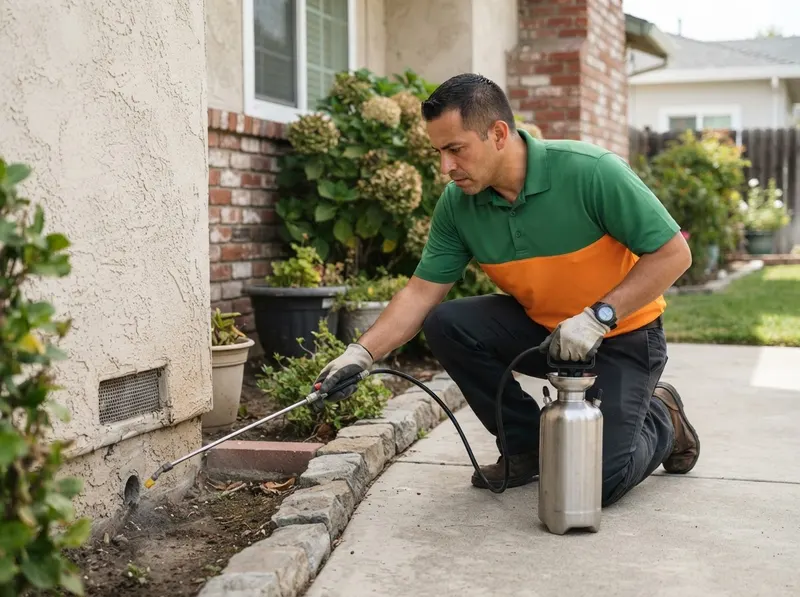
Residential properties near the San Joaquin River Delta experience persistent insect migration driven by seasonal moisture shifts, agricultural harvests, and microclimates across Brookside, Spanos Park, and Lincoln Village. Rather than utilizing broadcast pesticide sprays that generate airborne residues, sustainable insect management relies on integrated pest management principles outlined by the US EPA Integrated Pest Management Program. Treatments combine targeted structural exclusion, botanical perimeter barriers, and non-repellent formulations that workers carry back to central nests. Exterior foundations receive a continuous protective band applied up to 3 feet high and 5 feet out, shielding vulnerable slab penetrations, weep screeds, and plumbing entryways.
Interior interventions focus on mechanical monitoring and precise gel baiting rather than synthetic fogging. For chronic invaders like German cockroaches, precise bait placement follows standards established by the Penn State Extension Department of Entomology, targeting harborages inside cabinet joints, sub-sink voids, and appliance motor housings without contaminating food preparation surfaces. Crawling arthropods such as black widow spiders and American cockroaches require focused harborage reduction in crawlspaces and garages, adhering to environmental guidelines provided by the California Department of Pesticide Regulation and biological data from the UC Statewide IPM Program. Properties with elevated moisture in Sherwood Manor and Weston Ranch benefit from silica-based desiccant dusts injected into wall voids, which dehydrate insects mechanically without losing potency over time.
Structural insect defense requires maintaining exterior structural clearance to prevent bridging. Pests bypass surface treatments when tree branches touch eaves or when mulch beds contact stucco walls, a risk documented by the International Association of Certified Home Inspectors. In suburban sectors such as Morada and Country Club, landscape irrigation lines often deposit standing water against slab perimeters, elevating subterranean termite and carpenter ant pressure. Incorporating botanical insect growth regulators prevents immature nymphs from reaching reproductive maturity, following application thresholds published by the University of Kentucky College of Agriculture and the Pest Control Technology Technical Library. This diagnostic strategy resolves infestations at the nest level, eliminating the necessity of recurring chemical saturations while protecting household occupants.
For multi-family properties near the Pacific neighborhood and commercial assets around the Stockton Arena and Civic Center, routine documentation meets sanitation mandates tracked by the San Joaquin County Public Health Services and structural standards from the National Pest Management Association. Maintaining continuous physical barriers around utility conduits, door thresholds, and expansion joints prevents perimeter insects from gaining structural access, ensuring compliance with vector management policies overseen by the California Department of Public Health Vector-Borne Disease Section.
Every job gets a firm, written price after a free on-site visit.
For standards, safe disposal, and service guidance on PEST CONTROL SEVICE in Stockton, CA, useful references include U.S. EPA, ENERGY STAR, U.S. Dept. of Energy, Consumer.gov, U.S. Census Bureau, and Google Maps. General consumer and small-business resources are available from USA.gov, Better Business Bureau, FTC Consumer Advice, U.S. Small Business Administration, and Ready.gov.
Tell us about your insect control job in Stockton and we'll send a clear, written quote, usually the same day.
 SilverOak Pest Solutions